Most people blame themselves when progress stops. "I'm not consistent enough." "I need more discipline." Sometimes that is true. But sometimes the problem is the room you are training in. A gym can quietly cap your progress for months before you notice. Here are the five tells.
1. You wait more than 5 minutes for a rack at any time of day
Serious lifters squat, deadlift, and press. If the squat rack is permanently occupied by someone doing bicep curls in it at 6 PM on Tuesday, that is a gym that oversold its membership relative to its equipment. The fix is not working harder on your schedule. The fix is a gym with more racks and fewer tourists.
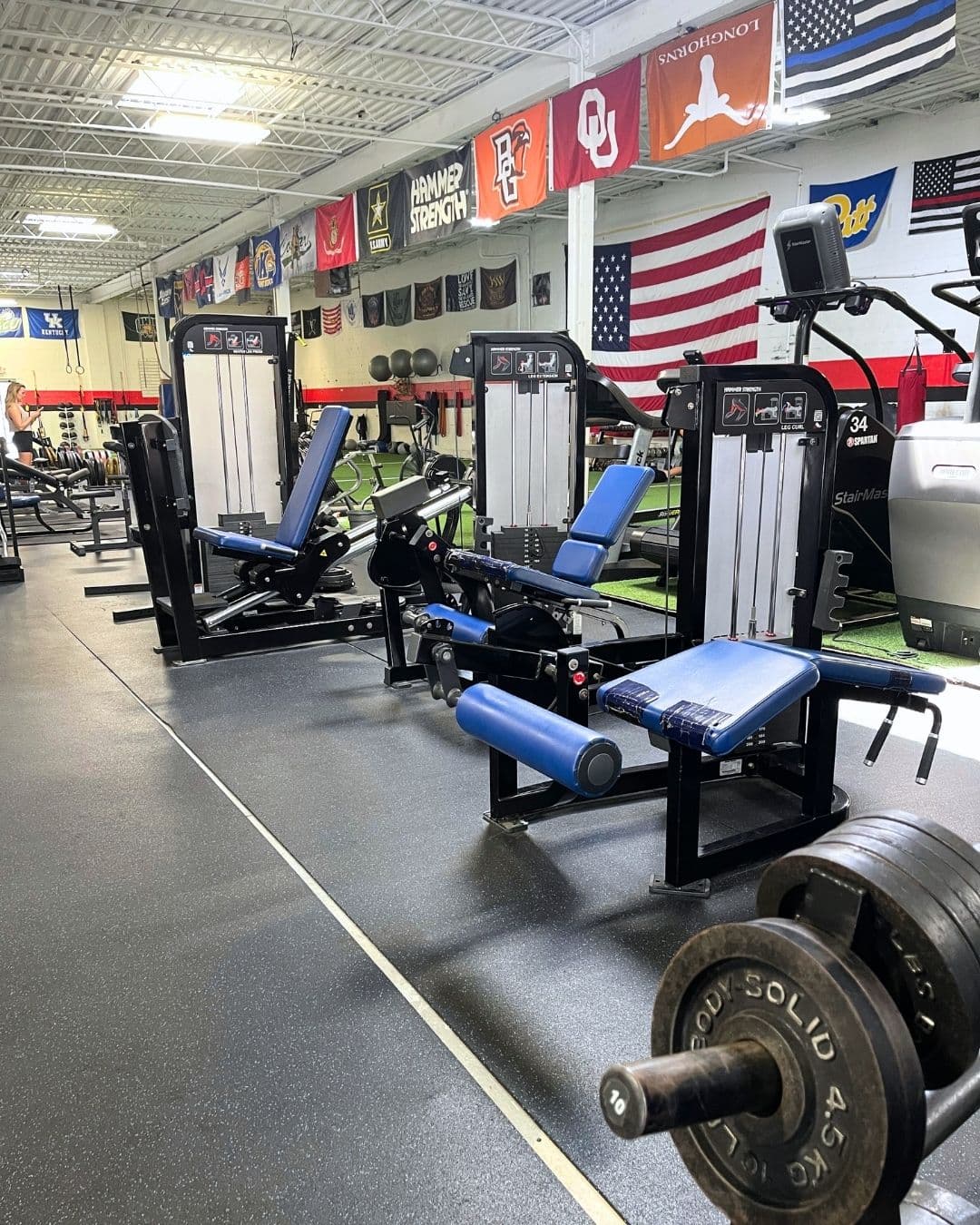
At AIM we have four squat racks and a competition-grade platform in an 8,000 sq ft facility. You will not wait. See what else is on the floor.
2. Nobody at the gym knows your name after six months
This is not a vibes complaint. Community is a performance variable. People who feel known at their gym train more consistently and quit less often — the research on habit formation lines up with this. If you have been checking in with a key fob for half a year and the front desk still looks at you blankly, that is a signal about how much the gym invests in actually knowing its members.
At a coaching-first gym, your name is on day one. The owner, the trainers, and the regulars all know you within a few weeks. That is not a nice-to-have. It is a reason you show up.
3. The "trainers" cannot name their certification
Walk the floor of your gym and ask one of the trainers what their primary certification is. If they fumble it, hedge, or say "I just know fitness," they are not a trainer. ACSM, NSCA, NASM, USAW — these are specific credentials from specific accrediting bodies. A real trainer can name theirs and tell you what the exam covered.
A gym staffed by people without real credentials is not a training facility. It is a space that rents equipment.
4. The equipment is new, shiny, and useless
Walk into a lot of commercial gyms and you will see a wall of selectorized machines, a few benches, a treadmill row, and almost no free weights above 50 lbs. That setup works for the first 90 days of a beginner's training. After that, you have outgrown the room.
A real training facility has: full dumbbells 5-120+ lbs, multiple barbells and plates, competition-grade platforms, cable stations, and some open floor for sled work, carries, and conditioning. If your gym does not have those, you are capped on how far you can progress inside it.
5. You have never gotten a program
Even if you are not paying for personal training, a good gym offers something: a free intro session where someone writes you a starter program, a group fitness class that is actually programmed (not freestyled), or at minimum a staff member who will answer "what should I do today?" with a real answer.
If your gym's answer to "how do I get better?" is "I don't know, try YouTube," you are in a building, not a training environment.
What a real gym looks like
Honest coaching. Real equipment. People who know your name. A schedule that respects your life. Programs that actually progress. That is the standard a serious training facility holds itself to.
AIM has been Mentor's coaching-first gym since 2018. Memberships start at $45/month, personal training at $60/session, group fitness at $25/class. If you want to see the floor and meet a coach before signing anything, reach out for a free intro session. 30 minutes, no sales pitch.