Personal training
Why Personal Training Is Worth It (and How to Pick the Right Trainer)
Personal training gets a bad reputation because most of it is bad. The commercial-gym "trainer" who hands you a clipboard and plays on their phone while you squat is real. The YouTube program you half-finished is real. The $200/month app that sends you the same workout every week is real. Any of those will leave you convinced personal training is a scam.
Good personal training is a different product. Done right, it is the single fastest way to make progress in the gym, and the single safest way to add load without getting hurt. The question is not whether personal training works. It is whether you have found a real one.
What personal training actually buys you
- A program built for your body. Not a template. Your coach watches you move, asks about your schedule and injury history, and writes something specific to you.
- Progression you cannot do alone. Knowing when to add 5 lbs vs. 25, when to hold back, when to deload — this is coaching that takes years to develop. You cannot YouTube it.
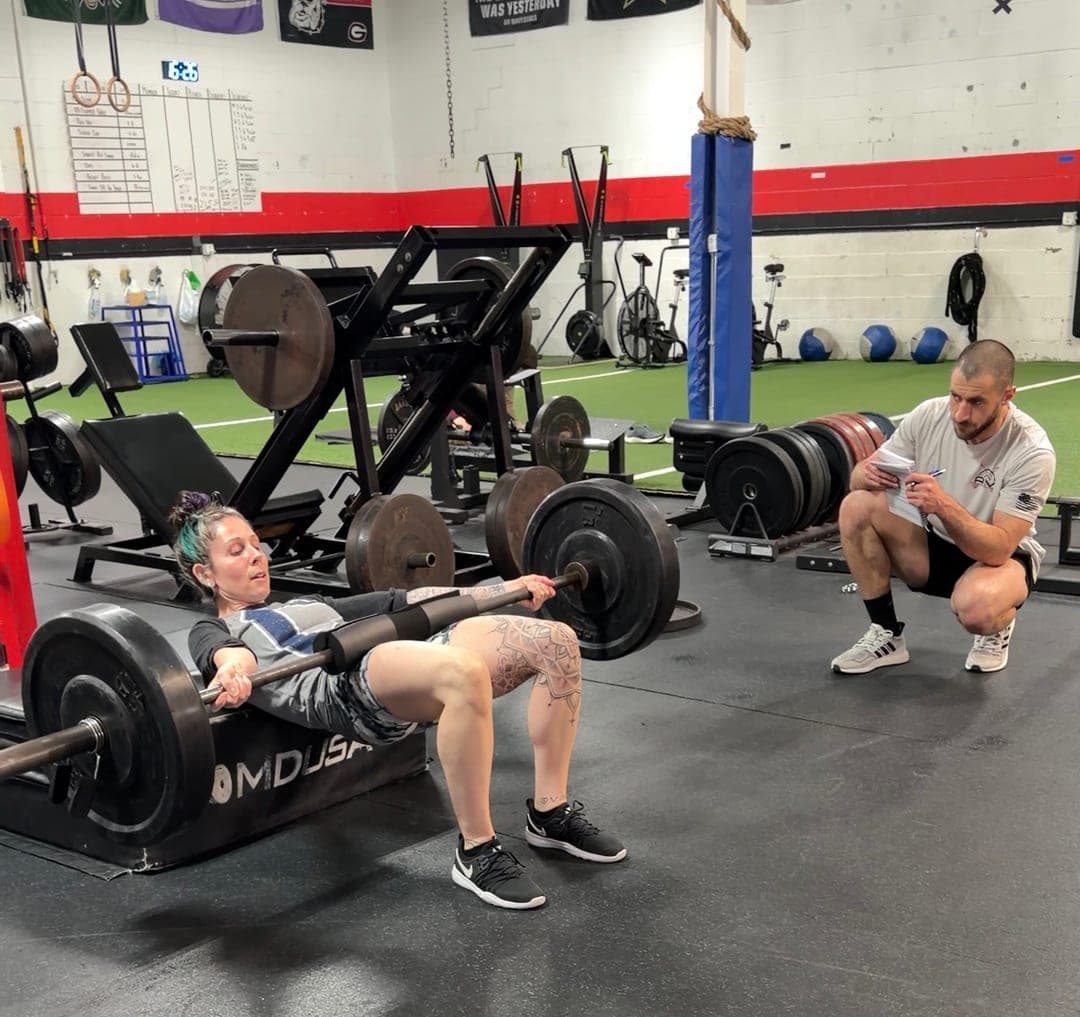
- Form coaching in real time. Nobody has ever written themselves out of a bad hip hinge pattern. You need someone standing there watching.
- Accountability that is paid, not optional. You show up because you have a session. That alone fixes 80% of the consistency problem.
- Faster, safer progress. People with coaches hit PRs they would not have hit alone, and get hurt less often doing it.
How to pick a trainer in Northeast Ohio
If you are vetting trainers in Mentor, Willoughby, or anywhere in Lake County, these are the five things to check — in this order.
1. Credentials
At minimum, ACSM, NSCA, NASM, or USAW certification. Preferred: an Exercise Science degree. A trainer who cannot name their primary certification is not a trainer.
2. Specialty
A good trainer tells you what they are good at and what they are not. Someone who claims to be the best option for a powerlifter, a postpartum mom, and a 70-year-old with a hip replacement is probably not the best at any of them. Match the trainer to the goal.
3. Programming structure
Ask: "Will I get a written program I can see?" If the answer is "I just make it up as we go," walk away. Real training has structure, waves of volume and intensity, and clear progressions.
4. The intake session
Every real trainer runs a free or paid intake before you buy a package. They should ask about your injury history, your schedule, your goals, and your training background. If they skip straight to the sales pitch, that tells you what the next six months will look like.
5. The gym environment
You will spend 2-5 hours a week in this space. It needs real equipment and other people who train seriously. A trainer stuck inside a Planet Fitness is working with one hand tied behind their back.
What does personal training cost?
In Northeast Ohio, serious one-on-one coaching generally runs $60-$120 per session depending on package size and coach experience. At AIM, personal training starts at $60/session, and bundling with a membership drops your overall monthly cost. Hourly rates are not the metric that matters — results per dollar is. A $60/session coach who programs well and watches your form is a better buy than a $25/session coach who hands you a clipboard.
Who should pay for personal training vs. just a gym membership
Not everyone needs 1-on-1. Here is a quick rubric:
- Pay for personal training if: you are a beginner and want to lift safely, you have a specific goal with a timeline (a race, a PR, body composition change by a date), you are returning from an injury, or you have tried training solo and could not stay consistent.
- Just a membership works if: you have been training for years, your program is working, and you mostly need equipment and a space.
- Group fitness is the middle ground: you want coach-led structure without 1-on-1 pricing. See AIM's group fitness page for the current class schedule.
What to do next
Full details on AIM's personal training in Mentor, Ohio, or reach out for a free intro session with a coach. 30 minutes, no sales pitch, no commitment.